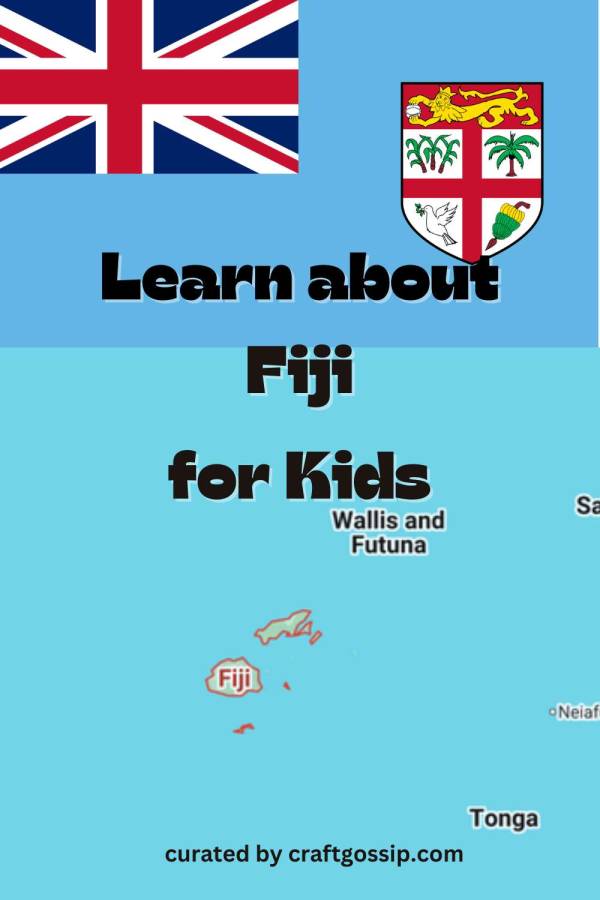
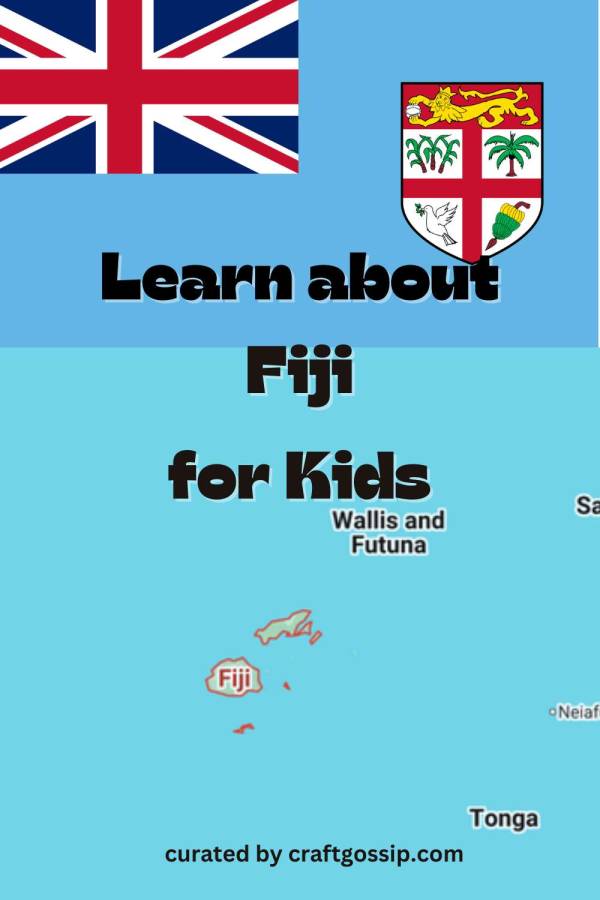
Fiji is a country in the south Pacific made up of more than 330 islands — more than 100 of which are permanently inhabited — and more than 500 islets. Let’s take a closer look!
Fiji Basics
Officially the Republic of Fiji, it is part of Melanesia, which is a subset of Oceania. It’s about 1,100 nautical miles (that’s 1,300 miles or 2,000 kilometers) north-northeast of New Zealand.
The total land mass is around 7,100 square miles, or 18,300 square kilometers. About 87 percent of Fijians live on two islands — Viti Levu and Vanua Levu — and three quarters of all Fijians live on the coasts of Liti Levu, which is where the capital city, Suva, is.
Most of the islands were formed by volcanic activity starting 150 million years ago, and people have lived there since the second millennium BC. Europeans first visited in the 17th century (with Dutch explorer Abel Tasman said to be the first to see the land in 1643), and Fiji became a British colony in 1874.
It gained independence in 1970, and starting in 1987 there were multiple coups, a military takeover, and, finally in 2014 the first democratic election. It is now a unitary parliamentary republic, with a president, prime minister and parliament.
About 57 percent of people in Fiji are indigenous Fijians, which another 35 percent are Indo-Fijians. The recognized national languages include Fijian, English and standard and Fiji Hindi. About 64 percent of the country are Christians.
While Fijians called their home Viti, the name Fiji comes from what Tongans called the area, which is Fisi. It’s said the Captain James Cook popularized the mispronunciation used today.
Fiji has forest, mineral and fish resources and grows a lot of sugar cane, as well as making money from tourism.
Fiji National Symbols
The Fiji flag is what’s known as a defaced Blue Ensign, which is a dark blue flag with the Union Jack in the top left corner. The Fiji flag uses a lighter blue and also includes the shield from the nation’s coat of arms on the right side. The flag was adopted on independence in 1970.
The shield shows a gold lion at the top and a St. George’s cross in the bottom part, which includes images in the white portions made around the cross. The images are of sugar cane, a coconut palm, bananas and a dove. The lion also holds a cacao pod, and all of those (other than the dove of course) represent important agricultural products of the country.
The rest of the coat of arms includes a Fijian canoe with outrigger in full sail and two native Fijians holding the shield. A ribbon at the bottom includes the Fiji motto in Fijian, which translates to “fear God and honor the King.”
The national anthem is “God Bless Fiji,” which was also adopted in 1970. The English version is most commonly sung, though the song also has Fijian lyrics, they are not a direct translation and don’t have much in common.
The whistling dove (Ptilinopus layardi) is a dove that only lives in Fiji. The males have bright yellow hears and green bodies. Another endemic species that is considered a national symbol is tagimaucia, a drooping red and white flowering wine that can only be found on one Fijian island. I’ve also seen the Fiji banded iguana mentioned as a national animal. This is another one that only lives in Fiji and spends most of its life in trees.
Fiji Learning Activities
Did you know the reality TV show “Survivor” has filmed in Fiji since 2016? The Mamanuca Islands have been used since season 33 of the show, which typically films two seasons back to back that are shown over a year. Play your own Survivor style games like an obstacle course or capture the flag, or go all out and make a full-on Survivor competition like Noblemania did.
Learn about the drua, the sailed canoe shown on the coat of arms (you can see a photo for one from 1884 here). Then make it a STEM challenge to build your own and see how they float.
Activity Village has some FIjji related worksheets, and Kids Konnect has Fiji facts and worksheets. You can also find worksheets, a fact file and PowerPoint about Fiji at Twinkl. And of course there are plenty of resources at Teachers Pay Teachers. Beyond Imagination P on Etsy has a cute country study, too.
If you want a taste of the Fijian language, grab the activity pack from Inspire Little Minds (written by an Indo-Fijian) and the coloring and activity book you can download from the Museum of New Zealand. This video includes some common Fijian words.
And if you happen to be traveling to Fiji, make sure you download the printable Fiji travel journal from Always Things to Do on Etsy.
One of the dishes considered to be a national dish is kokada, which is raw fish marinated in lime and coconut. Because of the high population of people with Indian heritage there, you’ll find a lot of curry, roti, and other Indian foods on the menu, as well as some British foods. Another one to try is palusami, which is like corned beef, traditionally wrapped in taro leaves and cooked underground. This recipe from Dinner by Dennis uses an oven and swiss chard in place of taro.