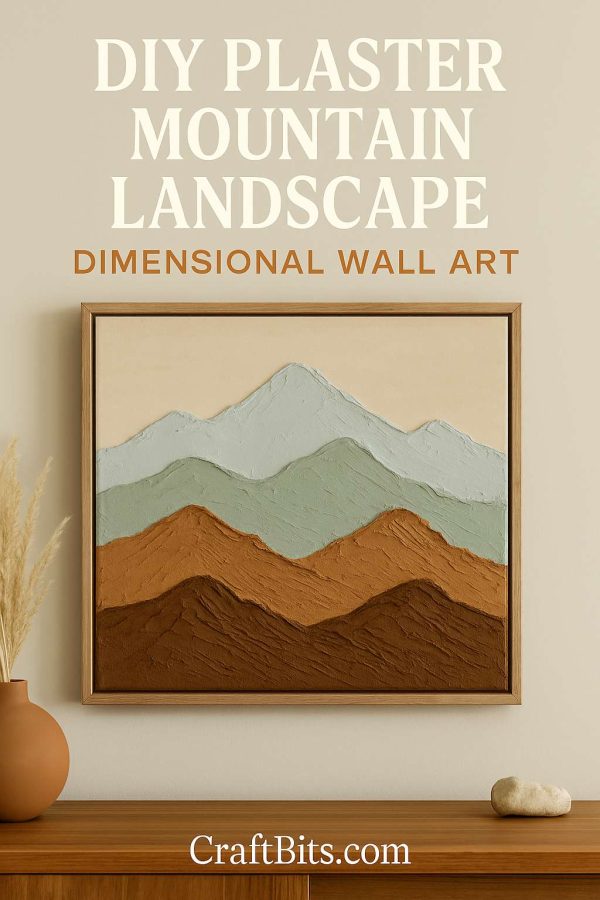
If you’ve fallen in love with the textured ghost paintings, you’ll be thrilled to know the same plaster compound technique works beautifully for all sorts of art styles — including stunning, layered mountain landscapes. This project blends earthy calm with rich, tactile depth, making it a perfect piece for your living room, bedroom, or even a cozy reading nook.
Why a Plaster Mountain Scene Works
Mountains are naturally full of texture, from rugged cliffs to soft misty horizons. Using plaster lets you build those layers physically, so your painting almost feels like you could step right into it. Plus, you can keep the colours muted and natural, or go bold with a sunset-inspired palette.
Materials You’ll Need
- Canvas or wooden art panel (sturdy enough to hold texture)
- Plaster compound / joint compound
- Palette knives (variety of sizes for different ridges and edges)
- Pencil or chalk (for sketching outlines)
- Acrylic paints in your chosen colour scheme (think earthy browns, deep greens, sky blues, or warm sunset tones)
- Paintbrushes – one wide, one fine
- Cup of water & rag for clean-up
- Drop cloth or protective sheet for your work area
Step-by-Step Instructions
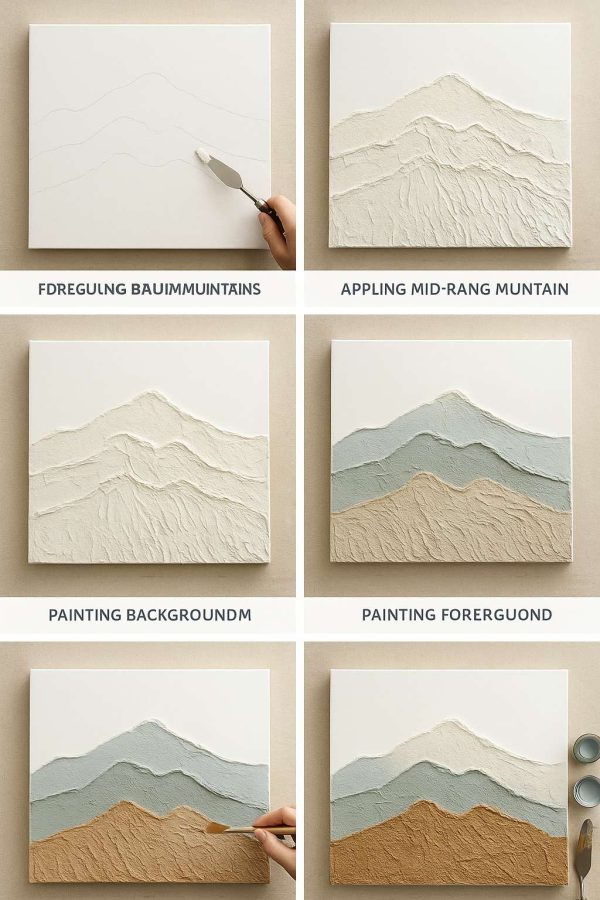
1. Sketch Your Scene
Lightly sketch your mountain outlines directly onto the canvas. Plan for three to five layers of mountains — closer ones will be larger and more detailed, distant ones smaller and softer.
Paint the Sky
Fill in the sky with soft washes of colour — morning blues, dusky pinks, or golden sunset gradients work beautifully. Blend where the mountains meet the sky for a natural horizon.
2. Build the Background Mountains
With a palette knife, spread a thin layer of plaster along the lines of your farthest mountains. Keep the edges soft and blend them slightly into the “sky” area so they appear hazy.
3. Layer in the Mid-Range Peaks
Once the background is touch-dry, add the next range with slightly thicker plaster. Use the edge of your knife to create ridges, crags, and little peaks. Overlap them slightly over the background to add depth.
4. Create the Foreground Detail
For your closest mountains, scoop on generous plaster. Press, pull, and lift the knife to make rocky, uneven textures. Think about where the light might hit — leave some smoother areas for highlights later.
5. Let It Dry
Leave your work to dry completely (overnight is best if you’ve used thick layers).
6. Add Colour
Start with the farthest mountains, painting them in your palest tones (blues, greys, or lavender). Gradually work forward, deepening your colours for each layer.
- Tip: Keep your strokes horizontal for a natural look.
- Use a dry brush to gently highlight the plaster ridges with lighter shades.
- Alternatively, you can tint the plaster with the paint BEFORE applying it to the canvas, this gives a subtle color as it dries considerably lighter and uses more paint. Try it both ways to see which style you like the best.
8. Finishing Touches
Add fine shadow details with a small brush, or leave the colour simple and let the plaster texture speak for itself. Seal with a clear matte spray if you want extra protection.