A Moroccan pouf is a specific type of ottoman: handcrafted from leather in Morocco, filled with natural materials, and rooted in centuries of North African craft tradition. An ottoman is the broader Western category — upholstered, factory-made, and designed primarily for function.
The two terms are used interchangeably online, which creates real confusion when buying. This guide breaks down exactly what separates them — and helps you decide which one belongs in your home.
What Is a Moroccan Pouf?
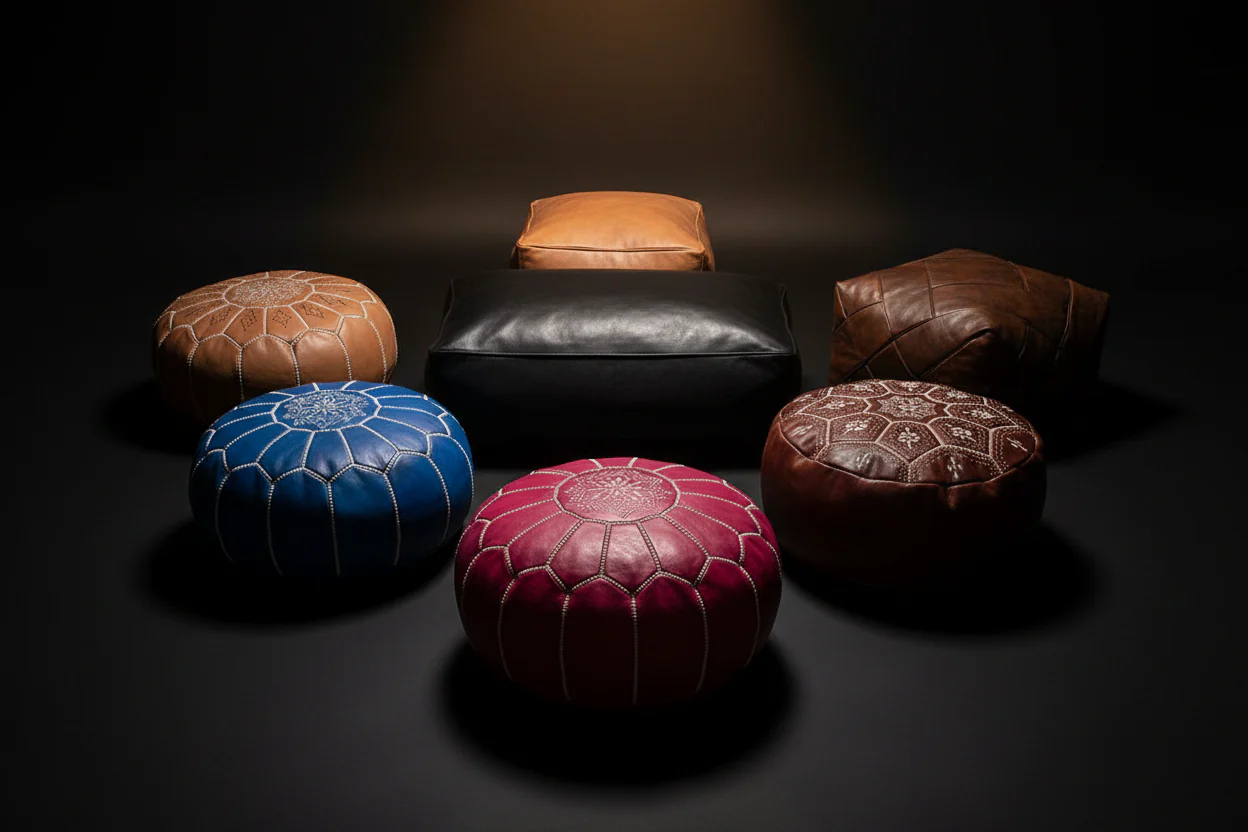
A Moroccan pouf — known locally as a tabouret or pouf marocain — is a low floor cushion made from leather and handcrafted by artisans in Morocco. It is filled with natural stuffing (cotton, wool, or recycled textiles) and typically features hand-tooled or embroidered decorative patterns on the exterior.
Key characteristics:
- Leather exterior — sheep, goat, or cow leather, hand-tooled or embroidered
- Handmade by artisans in Morocco using traditional techniques
- Available round, square, or rectangular
- Zip closure on the underside — often sold unstuffed for shipping
- Natural variation in colour, size, and pattern — a mark of authenticity
- Price range: $109–$249 depending on size and style
At Moroccan Corridor®, our pouf collection is one of the most complete available online. It spans several distinct families:
- Round Embossed Tabouret Poufs — the classic form, hand-tooled with geometric patterns. Available in tan, fuchsia, red, black, orange, yellow, and turquoise.
- Round Embroidered Poufs — the traditional collection, featuring intricate hand-embroidered motifs stitched directly onto leather panels by female artisans. Each piece is unique.
- Flowers Collection — round poufs with hand-embroidered floral patterns, including the Tan Flowers and the iconic Blue of Marrakesh.
- ZigZag Collection — a bolder geometric pattern, hand-tooled in a striking zigzag motif across the leather surface.
- Tile Design Collection — inspired by Moroccan zellige tilework, featuring a mosaic-like leather panel construction. A contemporary take on a centuries-old craft.
- XL Ottomans — oversized statement pieces for larger living spaces, available in multiple shapes and finishes.
- Square Poufs — more architectural, ideal as a coffee table alternative. Including the Lilya and Lila.

What Is an Ottoman?
An ottoman is a Western term for a padded, upholstered seat or footrest — typically without a back or arms. The word originates from the Ottoman Empire, where low cushioned seating was central to interior life. In contemporary Western interiors, an ottoman usually refers to a fabric-covered, foam-padded piece of furniture that serves as a footrest, extra seat, or coffee table alternative.
Key characteristics:
- Fabric or faux leather exterior — velvet, linen, cotton, or synthetic materials
- Factory-made, machine-stitched construction
- Pre-stuffed with foam or polyester filling
- Uniform appearance — identical units from the same production run
- Wide price range: $30–$500+ depending on brand and material
Key Differences: Moroccan Pouf vs Ottoman
| Moroccan Pouf | Ottoman | |
|---|---|---|
| Material | Genuine leather (sheep, goat, cow) | Fabric, faux leather, or genuine leather |
| Construction | Handmade by artisans in Morocco | Factory-made, machine-stitched |
| Stuffing | Natural materials or sold unstuffed | Pre-stuffed with foam or polyester |
| Height | Low (H30–42cm) | Variable (H35–50cm) |
| Shape | Round, square, or rectangular | Round, square, rectangular, or storage |
| Pattern | Hand-tooled or embroidered — unique per piece | Uniform — identical across production run |
| Lifespan | 10–20+ years with basic care | 3–7 years typically |
| Price range | $109–$249 | $30–$500+ |
| Origin | Morocco — traceable craft tradition | Typically mass-produced, origin varies |
Which One Should You Choose?
The answer depends on what you are optimising for.
Choose a Moroccan pouf if:
- You want a piece that will last a decade or more
- You value handmade craft and traceable origin
- You want something that develops character over time — leather patina, unique markings
- You are decorating with natural materials, earthy tones, or a globally-inspired aesthetic
- You want a statement piece that works as footrest, extra seat, or coffee table
Choose a standard ottoman if:
- You need a specific height or size that poufs do not offer
- You want built-in storage
- You are working with a very tight budget
- You need to match an existing upholstered furniture set exactly
For most buyers who are genuinely comparing the two, the Moroccan pouf wins on longevity, aesthetics, and value over time. A $149 leather pouf that lasts 15 years costs less per year than a $60 fabric ottoman replaced every three.
How Moroccan Corridor® Bridges Both Traditions
At Moroccan Corridor®, we use both terms deliberately — because our customers search for both. What we sell is always a Moroccan pouf: genuine leather, ethically handmade in Morocco, with hand-tooled or embroidered patterns that cannot be replicated by machine.
Our collection covers every shape and style:
- Round Embossed Tabouret Poufs — from $109. In tan, fuchsia, red, black, orange, yellow, turquoise, and green.
- Round Embroidered & Flowers Poufs — hand-embroidered floral and geometric motifs. Including the Tan Flowers and the iconic Blue of Marrakesh.
- ZigZag Collection — bold geometric hand-tooled pattern, a contemporary statement piece.
- Tile Design Collection — zellige-inspired mosaic leather construction, bridging traditional craft and modern design.
- XL Ottomans — oversized formats for larger spaces and bolder interiors.
- Square Poufs — architectural form, ideal as a coffee table. Lilya and Lila.
- Rectangular Poufs — bench-style, ideal at the end of a bed or sofa. Black Salwa, Brown Aya.
Every piece ships from Morocco via FedEx International Priority (2–8 days), with a stuffed option available for the USA, Canada, Australia, and UK.
Frequently Asked Questions
Is a Moroccan pouf the same as an ottoman?
Not exactly. A Moroccan pouf is a specific type of ottoman — handcrafted from leather in Morocco. An ottoman is the broader Western category that includes fabric-covered, factory-made pieces. All Moroccan poufs can function as ottomans, but not all ottomans are Moroccan poufs.
Which is more durable — a pouf or an ottoman?
A genuine leather Moroccan pouf will typically outlast a fabric ottoman by many years. Leather develops a patina over time and resists wear better than most upholstery fabrics. With basic care, a leather pouf can last 10–20 years.
Can a Moroccan pouf be used as a coffee table?
Yes — particularly square and rectangular poufs. Place a tray on top to create a stable surface for drinks and books. This is one of the most common uses in Moroccan-inspired interiors.
Are Moroccan poufs comfortable to sit on?
Yes. When properly stuffed, a Moroccan leather pouf is firm but comfortable for sitting. Round poufs are slightly softer; square and rectangular poufs are more structured.
Do Moroccan poufs come pre-stuffed?
Many are sold unstuffed to reduce shipping weight and cost. Moroccan Corridor® offers a pre-stuffed option for customers in the USA, Canada, Australia, and UK. Unstuffed poufs can be filled with cotton batting, old clothing, or recycled textiles.
What is the best size for a Moroccan pouf?
Round poufs (H32cm x D40cm) work well as footrests and accent pieces. Square poufs (H40cm x L50cm x W50cm) are better as coffee table alternatives or structured seating. Rectangular poufs work as bench-style pieces at the end of a bed or sofa.
How do I care for a Moroccan leather pouf?
Wipe with a dry or slightly damp cloth. Avoid soaking the leather. Apply a leather conditioner every few months to maintain suppleness. Keep away from direct sunlight to prevent fading.
Where are Moroccan Corridor® poufs made?
All poufs are ethically handmade in Morocco by skilled artisans using traditional leather craft techniques. They ship directly from Morocco via FedEx International Priority.