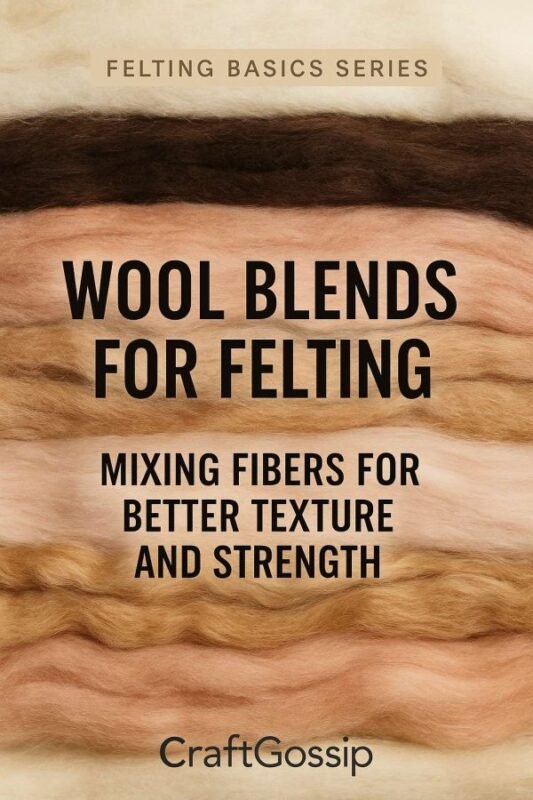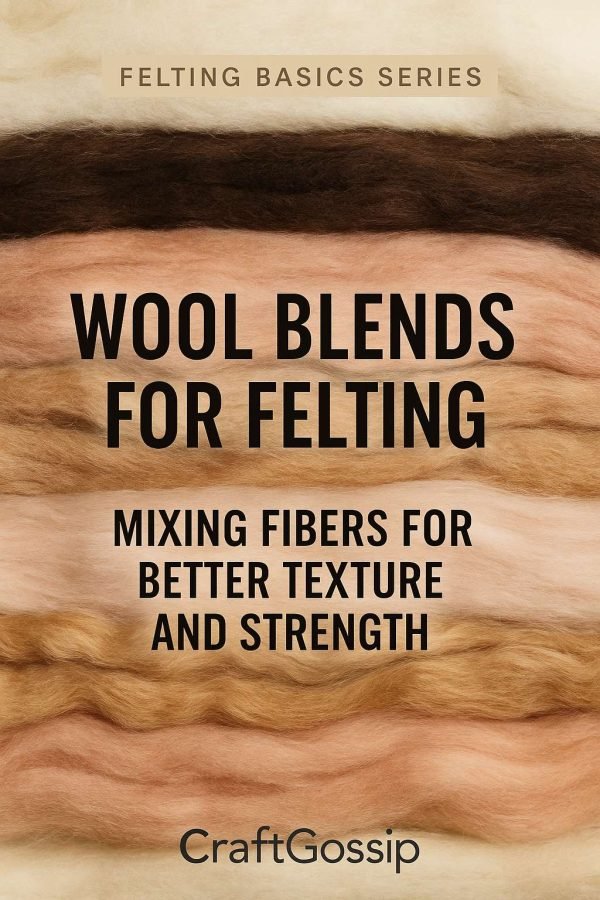
You know how every felter eventually ends up with a pile of leftover bits — some soft Merino, a pinch of coarse Romney, maybe even a silky alpaca tuft or a random batt from that one fiber fair you couldn’t resist?
That’s your magic stash.
Felting blends are where the real artistry happens. Combining fibers can transform an ordinary piece into something stronger, smoother, or more textured — depending on how you mix them. Whether you’re wet felting, needle felting, or experimenting with nuno, learning how to blend different wools and fibers gives you control over texture, strength, and finish.
So, let’s talk about why wool blends matter, how they behave differently, and which combinations give the best results for your next project.
Why Blend Wool for Felting?
Every fiber has its own personality. Some felt lightning-fast (like Corriedale), some give shine (like silk or mohair), and some — like Merino — provide softness but little structure.
When you blend fibers, you’re essentially creating a customized mix that balances these qualities. Think of it like baking — one ingredient adds texture, another adds structure, and another brings the “wow” factor.
Benefits of Blending Wool:
- Improves strength – add longer fibers for durability.
- Changes texture – combine coarse and fine wools for contrast.
- Speeds up or slows down felting – great for control.
- Adds shine or drape – from fibers like silk, bamboo, or alpaca.
- Reduces cost – stretch premium wools by blending with affordable base fibers.
- Creates unique visual effects – marled tones, gradients, or surface shimmer.
Blends also give your work more stability. A pure Merino scarf might feel luxurious but stretch out over time, while a Merino-Corriedale blend keeps its shape beautifully.
Common Wool Blends and Why They Work
1. Merino + Corriedale
This is the felting world’s dynamic duo. Merino adds softness and smoothness, while Corriedale provides body and stability. Perfect for wearable art or projects that need structure without losing luxury.
Use for: Scarves, handbags, hats, or wall art.
Ratio: 70% Merino / 30% Corriedale for soft structure.
Result: Smooth finish with improved firmness and faster felting time.
2. Merino + Romney
This combo gives a rustic, tactile quality. Romney’s long, lustrous fibers create visible texture and help the piece hold shape.
Use for: Wet-felted rugs, textured wall hangings, or bowls.
Ratio: 60% Merino / 40% Romney for balanced texture.
Result: A beautiful contrast between silky and crisp fibers.
3. Wool + Silk
The silk blend — also known as Nuno Felting’s best friend. The silk adds sheen and flow while the wool locks it down. It creates an elegant drape and subtle surface pattern that looks almost painterly.
Use for: Scarves, wraps, and wearable art.
Ratio: 70% wool / 30% silk.
Result: Lightweight, smooth fabric with natural shine.
4. Wool + Alpaca
If you crave softness but struggle to felt alpaca alone, mix it with wool. The wool’s scales help the alpaca lock in place, while the alpaca adds an irresistible silky touch.
Use for: Felted shawls, soft sculptures, or baby-safe crafts.
Ratio: 80% wool / 20% alpaca for reliability.
Result: Softer, fluffier felt with subtle sheen.
5. Wool + Mohair
Mohair (from Angora goats) adds strength and luster. It’s slightly coarser, so it works beautifully in structured pieces like handbags or rugs.
Use for: Decorative wall hangings, sturdy 3D pieces.
Ratio: 50/50 or even 40/60 mohair-heavy for texture.
Result: Slight halo, glossy texture, and added durability.
6. Wool + Silk + Bamboo
This triple blend is a fiber artist’s dream. You get the softness of wool, the shimmer of silk, and the subtle crispness of bamboo fiber. The bamboo also adds a faint, elegant sheen without being slippery.
Use for: Nuno felting, wall art, luxury pieces.
Ratio: 60% wool / 20% silk / 20% bamboo.
Result: Elegant, airy felt with visual depth and strength.
How to Blend Fibers for Felting
Option 1: Hand Blending
Pull small tufts of each fiber and layer them in alternating directions. Then gently pull the entire pile apart and restack several times. This method gives soft, organic mixing — ideal for color blends or surface work.
Option 2: Using Hand Carders
Carders help distribute fibers more evenly. Brush small amounts of each fiber together until you achieve the mix you want.
Option 3: Drum Carding
For larger batches, a drum carder produces smooth, consistent batts that are ready to use. Great for workshops or repeatable results.
Wet Felting with Blends
Different fibers shrink at different rates, so expect variation — and that’s not a bad thing. The texture this creates can be stunning, especially when layering fine and coarse fibers.
Tips for Wet Felting Blends:
- Layer fine fibers (like Merino) on top for smoothness.
- Use coarse fibers underneath for strength.
- Avoid overworking — some blends felt unevenly if over-agitated.
- Expect beautiful natural rippling in silk or alpaca blends.
Needle Felting with Blends
For needle felting, blends can help control firmness and reduce fuzz. Using Corriedale or Romney in your mix gives your work definition and longevity.
Best Needle Felting Blends:
- Corriedale + Merino (for realistic animal fur).
- Romney + Alpaca (for textured or coarse surfaces).
- Wool + Silk (for detailed accent layers or doll hair).
Pro Tip: For small sculptures, use the coarser blend as your core and finer fibers for outer details.
Color Blending for Visual Depth
You can blend natural and dyed wools together for richer tones — think watercolor effects or realistic fur shading. Try combining two or three tones of the same color family for soft ombrés, or contrast warm and cool shades for painterly drama.
Sustainability in Blending
Blending also helps reduce waste. Use leftover scraps from past projects — even small amounts can change the character of your felt. Many felters now use upcycled fibers (like recycled sari silk or repurposed batt offcuts) to create eco-friendly, textured pieces.
Blending lets you work creatively and sustainably — a win-win for makers and the planet.
Sample Blend Ideas by Project
| Project | Recommended Blend | Why It Works |
| Nuno Felt Scarf | Merino + Silk | Lightweight, flowy, luxurious |
| Rug or Bowl | Romney + Corriedale | Firm, quick to felt, durable |
| Animal Sculpture | Merino + Corriedale | Soft but stable surface detail |
| Wall Art | Wool + Silk + Bamboo | Visual depth and sheen |
| Slippers | Corriedale + Romney | Sturdy, shape-retaining felt |
| Baby Blanket | Merino + Alpaca | Soft and gentle on skin |
Blending wool is where technique meets intuition. It’s less about rules and more about feel — the balance between smooth and rough, light and dense, matte and shiny.
Once you start experimenting, you’ll find every blend tells a different story. Some will surprise you, some will frustrate you, but all will teach you something new about your craft.
So pull out that basket of leftover fibers, trust your hands, and start blending. Your next masterpiece might just come from that little pile of scraps you almost threw away.