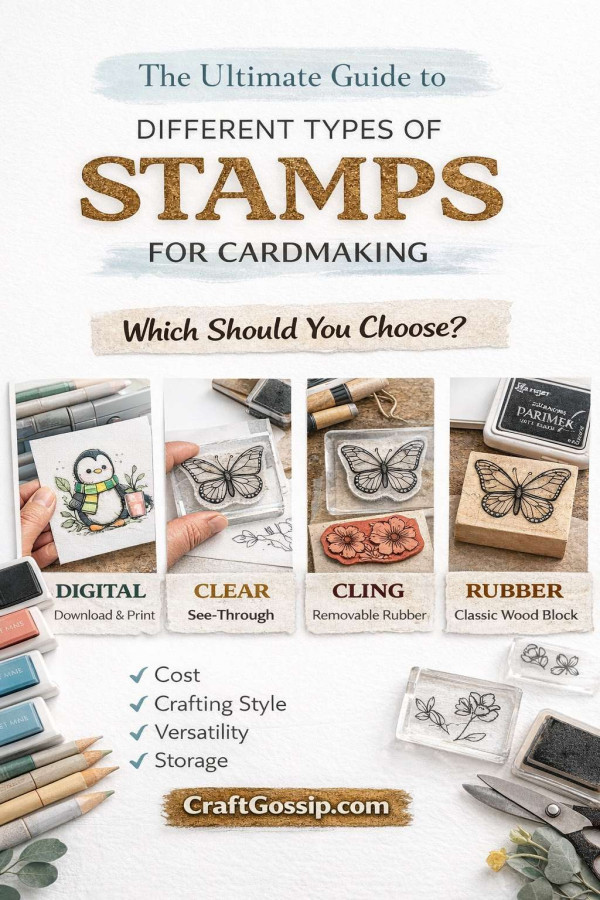
If you’ve ever stood in a craft store staring at rows of stamps and wondered, “What’s the difference between all of these?” — you’re not alone.
Over the years, stamping has evolved from simple wooden rubber blocks to clear photopolymer sets and fully printable digital stamps. And if you’re just getting started (or even if you’ve been crafting for years), understanding the different types of stamps for cardmaking can save you money, storage space, and frustration.
This complete guide breaks down every major type of stamp used in paper crafting today — including digital stamps, rubber stamps, clear stamps, cling stamps, foam stamps, and more — so you can confidently choose the right one for your creative style.
Let’s simplify it.
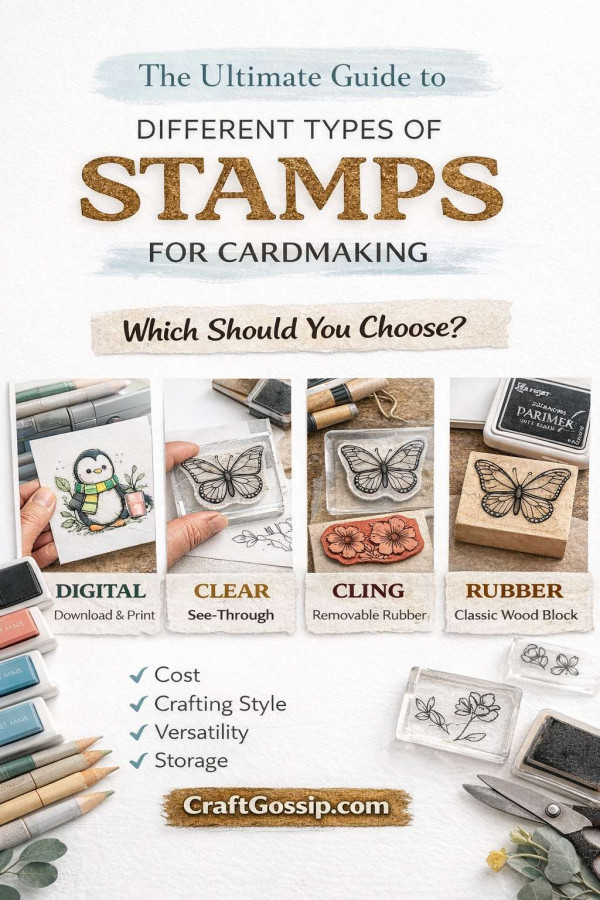
Digital stamps are downloadable images that you print at home. They’ve become increasingly popular with modern cardmakers, especially those who prefer flexibility and minimal storage.
How Digital Stamps Work
- Download the file (usually JPG or PNG)
• Resize it on your computer
• Print onto cardstock
• Color and assemble as usual
Why Digital Stamps Are Popular
- Unlimited resizing
• Instant download
• Budget-friendly
• No physical storage
• Perfect for seasonal themes
Digital stamps are especially helpful if you craft occasionally or want to experiment without investing in large physical stamp sets.
Best for:
• Custom sizing
• Scene building
• Printable sentiments
• Beginner-friendly crafting
These are the classic stamps many of us started with.
A red rubber stamp is mounted onto a wooden block, making it sturdy and ready to use without additional tools.
Pros
- Durable and long-lasting
• Crisp impressions
• No extra tools required
Cons
- Bulky storage
• Fixed size
• Higher cost per stamp
Wood-mounted stamps are ideal for crafters who love traditional stamping and don’t mind dedicated storage space.
Best for:
• Vintage stamp lovers
• Frequent stampers
• Heavy-use designs
Clear stamps are made from transparent photopolymer or acrylic material and must be used with a clear acrylic stamping block.
Why Crafters Love Clear Stamps
- See exactly where you’re stamping
• Easier to align sentiments
• More compact storage
Things to Consider
- Quality varies between brands
• Some cheaper acrylic stamps lose cling over time
These are excellent for layering techniques and precise placement.
Best for:
• Sentiment stamping
• Layered florals
• Background building
4. Cling Rubber Stamps
Cling stamps combine the durability of rubber with the flexibility of removable mounting.
They’re made from high-quality red rubber but cling to an acrylic block instead of being permanently mounted.
Advantages
- High detail quality
• Compact storage compared to wood-mounted
• Professional-level impressions
Best for:
• Detailed artwork
• Embossing techniques
• Long-term collections
Foam stamps are lightweight and typically used for bold, graphic designs.
They’re often used in mixed media projects rather than detailed cardmaking.
Best Uses
- Background stamping
• Art journaling
• Large, solid shapes
They don’t provide fine detail but are excellent for texture.
Background stamps are large-format stamps designed to cover an entire card front.
They come in rubber, cling, and clear versions.
Perfect for:
- Subtle tone-on-tone designs
• Ink blending bases
• Repeating patterns
These are often favorites for experienced cardmakers who want custom backgrounds without patterned paper.
7. Specialty Stamps
Some stamps fall into more niche categories:
Layering Stamps
Designed to build multi-step images using separate stamp layers.
Sentiment Sets
Focused entirely on phrases and greetings.
Planner Stamps
Smaller stamps designed for calendars and bullet journals.
Educational or Kids’ Stamps
Larger, simpler designs for classroom use.
Digital Stamps vs Physical Stamps: Which Should You Choose?
This is the question most cardmakers eventually ask.
Choose Digital Stamps If You:
- Want unlimited resizing
• Have limited craft storage
• Craft seasonally
• Prefer printable flexibility
• Want instant downloads
Choose Rubber or Clear Stamps If You:
- Love tactile stamping
• Enjoy embossing
• Prefer screen-free crafting
• Use ink blending techniques often
Many experienced cardmakers use both depending on the project.
What Type of Stamp Is Best for Beginners?
If you’re just starting out in cardmaking, here’s the simplest recommendation:
Start with a small clear stamp set for sentiments and try a few free digital stamps for focal images.
This gives you flexibility without investing heavily upfront.
What Supplies Do You Need for Stamping?
Depending on the stamp type, you may need:
For Digital Stamps:
• Printer
• Smooth cardstock
• Coloring tools
For Clear or Cling Stamps:
• Acrylic blocks
• Ink pads
• Stamp cleaner
For Rubber Stamps:
• Ink pads
• Storage solutions
Choosing quality ink and cardstock makes a bigger difference than many realize.
Frequently Asked Questions About Different Types of Stamps
What type of stamp gives the crispest image?
High-quality red rubber stamps (wood-mounted or cling) often provide the most detailed impressions.
Are digital stamps cheaper than rubber stamps?
Yes, in most cases. Digital stamps eliminate manufacturing and shipping costs.
Do clear stamps last long?
Good-quality photopolymer stamps can last years if cleaned properly.
Can I emboss with digital stamps?
Not directly. Digital stamps are printed, so you can’t heat emboss them like physical stamps.
Final Thoughts: The Best Stamp Is the One You’ll Actually Use
There isn’t one “best” type of stamp for cardmaking.
The right choice depends on:
- Your crafting style
• Your storage space
• Your budget
• Whether you enjoy screen time
• How often you craft
Digital stamps offer flexibility and affordability. Rubber stamps offer tactile satisfaction and timeless durability. Clear stamps offer precision and layering possibilities.
The smart cardmaker doesn’t choose sides — she chooses tools that make crafting joyful and manageable.
If you’re building your stamp collection, start small, experiment, and grow based on what you genuinely enjoy using.
Because at the end of the day, stamps are just tools.
The creativity? That’s all you.