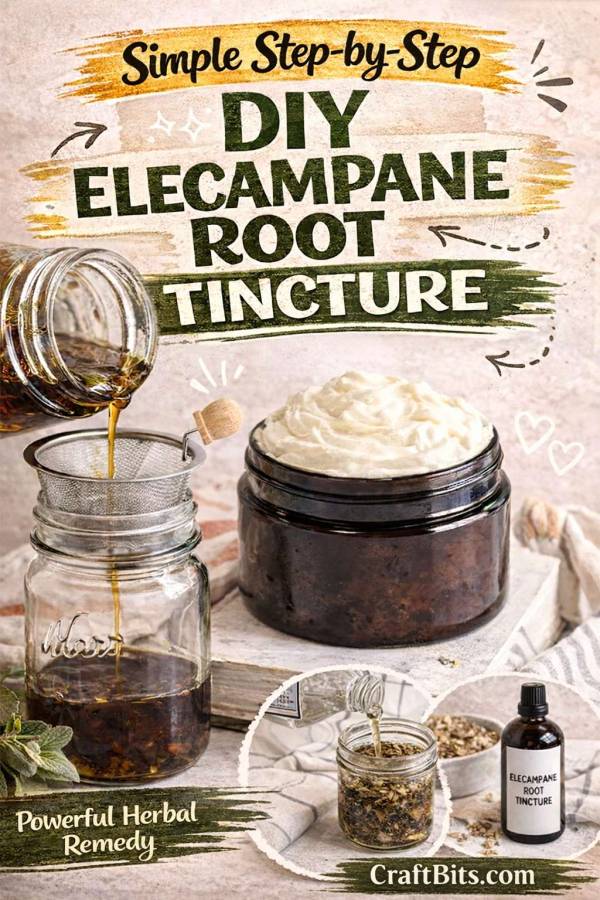
There’s something very old-fashioned and comforting about a herbal tincture project like this one. This elecampane root tincture tutorial has that homemade apothecary feel to it, like the sort of recipe you’d tuck away in a notebook and come back to every winter when everyone starts coughing dramatically in the lounge room. The project uses elecampane root, vegetable glycerin, and water, then lets the mixture sit for around six weeks before straining it into a tincture bottle.
What I like about this one is that it doesn’t try to be flashy. It’s a simple, slow craft, and honestly that’s part of the appeal. You’re not whipping up a sugar scrub in ten minutes and calling it a day. This is more of a patience project, which makes it feel nicely intentional. If you enjoy herbal DIYs and the whole “little jars and bottles lined up on the shelf” aesthetic, this one definitely scratches that itch.
The post also gives a bit of background on elecampane’s traditional uses, especially around respiratory support, digestive support, and its reputation for helping loosen mucus. It even touches on possible antimicrobial properties and mentions that research around blood sugar effects is still developing. That makes it feel more informative than just a bare-bones recipe card, which I always appreciate. I don’t mind a project with a little context, especially when the ingredient is one a lot of people may not have worked with before.
I also think the glycerin base makes this especially approachable. The tutorial notes that you can use vodka instead if you want to make an alcohol tincture, but this version keeps it softer and a bit more beginner-friendly. For anyone easing into herbal prep, that’s a nice option. Not everybody wants their kitchen looking like they’re opening a bush-medicine speakeasy.
The method itself is straightforward too: fill the jar about one-third with root, pour over the 75% vegetable glycerin and 25% water mixture, let it infuse for six weeks with the occasional shake, then strain and bottle it. It’s the kind of process that feels doable even if you’re not deep into herbal crafting.